Reading Every Line From a File C
| Waterloo–Reading line | |||
|---|---|---|---|
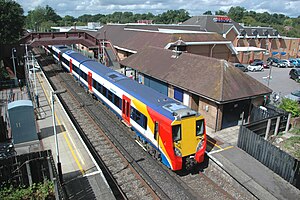 An SWR Class 458 at Martins Heron | |||
| Overview | |||
| Condition | Operational | ||
| Owner | Network Rail | ||
| Locale |
| ||
| Termini | London Waterloo Reading | ||
| Stations | 26 | ||
| Service | |||
| Type | Commuter rail | ||
| System | National Rails | ||
| Operator(s) | South Western Railway | ||
| Rolling stock |
| ||
| Technical | |||
| Runway approximate | ane,435 mm (4 ft8+ 1⁄2 in) standard gauge | ||
| Electrification | 750 Five DC third rail | ||
| Operating speed | lx MPH | ||
| |||

| Waterloo–Reading line | ||||||||||||||||||||||||||||||||||||||||||||||||||||||||||||||||||||||||||||||||||||||||||||||||||||||||||||||||||||||||||||||||||||||||||||||||||||||||||||||||||||||||||||||||||||||||||||||||||||||||||||||||||||||||||||||||||||||||||||||||||||||||||||||||||||||||||||||||||||||||||||||||||||||||||||||||||||||||||||||||||||||||||||||||||||||||||||||||||||||||||||||||||||||||||||||||||||||||||||||||||||||||||||||||||||||||||||||||||||||||||||||||||||||||||||||||||||||||||||||||||||||||||||||||||||||||||||||||||||||||||||||||||||||||||||||||||||||||||||||||||||||||||||||||||||||||||||||
|---|---|---|---|---|---|---|---|---|---|---|---|---|---|---|---|---|---|---|---|---|---|---|---|---|---|---|---|---|---|---|---|---|---|---|---|---|---|---|---|---|---|---|---|---|---|---|---|---|---|---|---|---|---|---|---|---|---|---|---|---|---|---|---|---|---|---|---|---|---|---|---|---|---|---|---|---|---|---|---|---|---|---|---|---|---|---|---|---|---|---|---|---|---|---|---|---|---|---|---|---|---|---|---|---|---|---|---|---|---|---|---|---|---|---|---|---|---|---|---|---|---|---|---|---|---|---|---|---|---|---|---|---|---|---|---|---|---|---|---|---|---|---|---|---|---|---|---|---|---|---|---|---|---|---|---|---|---|---|---|---|---|---|---|---|---|---|---|---|---|---|---|---|---|---|---|---|---|---|---|---|---|---|---|---|---|---|---|---|---|---|---|---|---|---|---|---|---|---|---|---|---|---|---|---|---|---|---|---|---|---|---|---|---|---|---|---|---|---|---|---|---|---|---|---|---|---|---|---|---|---|---|---|---|---|---|---|---|---|---|---|---|---|---|---|---|---|---|---|---|---|---|---|---|---|---|---|---|---|---|---|---|---|---|---|---|---|---|---|---|---|---|---|---|---|---|---|---|---|---|---|---|---|---|---|---|---|---|---|---|---|---|---|---|---|---|---|---|---|---|---|---|---|---|---|---|---|---|---|---|---|---|---|---|---|---|---|---|---|---|---|---|---|---|---|---|---|---|---|---|---|---|---|---|---|---|---|---|---|---|---|---|---|---|---|---|---|---|---|---|---|---|---|---|---|---|---|---|---|---|---|---|---|---|---|---|---|---|---|---|---|---|---|---|---|---|---|---|---|---|---|---|---|---|---|---|---|---|---|---|---|---|---|---|---|---|---|---|---|---|---|---|---|---|---|---|---|---|---|---|---|---|---|---|---|---|---|---|---|---|---|---|---|---|---|---|---|---|---|---|---|---|---|---|---|---|---|---|---|---|---|---|---|---|---|---|---|---|---|---|---|---|---|---|---|---|---|---|---|---|---|---|---|---|---|---|---|---|---|---|---|---|---|---|---|---|---|---|---|---|---|---|---|---|---|---|---|---|---|---|---|---|---|---|---|---|---|---|---|---|---|---|---|---|---|---|---|---|---|---|---|---|---|---|---|---|---|---|---|---|---|---|---|---|---|---|---|---|---|---|---|---|---|---|---|---|---|---|---|---|---|---|---|---|---|---|---|---|---|---|---|---|---|---|---|---|---|---|---|---|---|---|---|---|---|---|---|---|---|---|---|---|---|---|---|---|---|---|---|---|---|---|---|---|---|---|---|---|---|---|---|
| ||||||||||||||||||||||||||||||||||||||||||||||||||||||||||||||||||||||||||||||||||||||||||||||||||||||||||||||||||||||||||||||||||||||||||||||||||||||||||||||||||||||||||||||||||||||||||||||||||||||||||||||||||||||||||||||||||||||||||||||||||||||||||||||||||||||||||||||||||||||||||||||||||||||||||||||||||||||||||||||||||||||||||||||||||||||||||||||||||||||||||||||||||||||||||||||||||||||||||||||||||||||||||||||||||||||||||||||||||||||||||||||||||||||||||||||||||||||||||||||||||||||||||||||||||||||||||||||||||||||||||||||||||||||||||||||||||||||||||||||||||||||||||||||||||||||||||||||


The Waterloo–Reading line is a National Runway electric railway line between London Waterloo and Reading. The line runs westward through a series of S W London suburbs to Reading, in central Berkshire. Its passenger performance is by South Western Railway (SWR), which also manage its stations.
The Waterloo–Reading line is the core of a group of lines and branches heading by and large westwards from Waterloo, providing predominantly passenger services into London. All of the branches and connecting lines accept direct services into a defended group of platforms at Waterloo, so nigh of the services using the line do not run the whole length of the line. After leaving Waterloo, the line runs parallel to the Due south West Main Line earlier diverging at Clapham Junction and heading westwards. Within Greater London, the Hounslow Loop Line diverges at Barnes and reconnects again near Feltham, whilst the Kingston Loop Line diverges at Twickenham to join up with the South W Master Line at New Malden. At Staines, the original route carries onto Windsor, whilst the 1853 route to Reading diverges to run via Egham. At Virginia H2o, the Chertsey Branch Line provides another connection to the South Due west Main Line whilst at Ascot, the Ascot–Guildford line heads southwards towards Aldershot and Farnham. At Wokingham, the line is synonymous with the west end of the Due north Downs Line leading into Reading, to terminate in platforms 4, 5 and 6. The line likewise sees some freight services and special charters, which use the connecting line at Reading to bring together the Slap-up Western Main Line or the Chertsey Loop/Branch Line to connect to the South W Principal Line.
Due to the large swathes of suburbs served along the line and the drop from four to two tracks west of Barnes, services between Reading and London Waterloo are relatively slow compared to the 2 fast tracks between Reading and London Paddington. The line is predominantly used for commuter traffic into London with about of the traffic beingness generated by intermediate stations. To ease over-crowding, a roll-out is underway of eight-car trains being extended to ten coaches and there take been calls to change the service patterns to provide some boosted and faster services, cut out some of the intermediate stops.
History [edit]
The London and Southampton Railway opened the first stretch of railway between Nine Elms and Woking Mutual on 12 May 1838, and renamed itself as the London and South Western Railway (L&SWR) one month later. As the 50&SWR continued extending its railway towards Southampton, the first co-operative was opened by the Richmond and West End Railway (R&WER) to Richmond on 27 July 1846.[1] This branch line started at what is now Clapham Junction, although the station itself did not open until two March 1863. The terminus at Nine Elms was replaced on 11 July 1848 with a new station at Waterloo, originally named Waterloo Bridge. The Richmond co-operative was extended farther w by the Windsor, Staines and South Western Railway (WS&SWR) opening as far as Datchet on 22 August 1848 and to Windsor on 1 December 1849. Both the R&WER and WS&SWR were purchased past the L&SWR before their respective lines had been completed.
The South Eastern Railway (SER) opened its line from Wokingham to Reading on xv October 1849 under the auspices of the Reading, Guildford and Reigate Railway (RG&RR), which was so taken over past the SER in 1852.[2] This was role of the SER line from London to Reading via Guidlford and terminated at Reading Southern railway station, which was side by side to, but separate from the Great Western Railway station at Reading.
The line linking Staines with Wokingham was authorised in 1853 and built past the Staines, Wokingham and Woking Junction Railway, opening from Staines to Ascot on 4 June 1856 and onwards to Wokingham on 9 July 1856.[2] Initial services on the line were 6 trains a day between Waterloo and Reading (2 on Sundays), building up to 14 trains a day (7 on Sunday) past 1928. The line was operated by the L&SWR from the beginning, who leased it from the owning visitor in 1858 for l% of the gross profits, before purchasing it outright in 1878.[3]
There were now three competing routes to Reading: the GWR from Paddington at 36 miles; the LSWR from Waterloo at 43.v miles and the SER from Charing Cross at 69 miles. Despite the disparity, the GWR was not the obvious option due to the relative position of Paddington station, west of the City of London. This allowed intense competition between the 3 companies until in 1858 a new agreement between the 3 companies was made to fix prices and share fares. The agreement led to a connecting spur between the SER and GWR railways in Reading existence opened for appurtenances traffic on 1 December 1858 and to passenger traffic on 17 January 1859. A meliorate-placed link was opened on 17 Dec 1899, and the 3rd link on one June 1941.[3] The link is today used past special services such equally luxury steam services.
A new station named Martins Heron was opened on 3 October 1988 between Bracknell and Ascot.
On 4 Feb 1996 the 0510 Twickenham to London Waterloo became the first privately operated train to run in Britain for 48 years.[iv]
Electrification [edit]

The line was electrified on the DC tertiary runway system, initially at 660 volts, in sections:
- Waterloo to Twickenham flyover (for Kingston Loop) xxx January 1916
- Twickenham to Whitton Junction (for Hounslow Loop) 12 March 1916
- Whitton Junction to Windsor 6 July 1930[five]
- Staines to Virginia Water 3 January 1937 as part of the electrification of lines to Portsmouth[two]
- Virginia Water to Ascot and Reading South i January 1939.[2]
Accidents and incidents [edit]
On Sunday 11 April 1858 a guard was killed by hitting his head on an overbridge while standing on elevation of a moving train.[6]
On Thursday sixteen June 1859 a special train from Ascot ran into the back of another special railroad train at Virginia Water. No fatalities or injuries were caused only "many persons sustained impairment in dress, but not, it is believed, in person."[7]
On Saturday 13 August 1859 a train derailed at Feltham due to excessive speed and poor track condition.[8]
On Friday 16 September 1859 a train passed a signal at danger at Staines and ran into the dorsum of some other train resulting in 7 injures.[9]
On Tuesday seven June 1864 6 people were killed when a special train from Ascot passed a point at danger and collided with the railroad train in front at Egham.[10]
On Tuesday 11 October 1864 a passenger train from Reading collided with a goods train at Putney station due to passing an unlit signal at danger.[11]
On Tuesday 27 June 1871 1 person was killed on a foot crossing side by side to Twickenham station when they were struck by a train.[12]
On Thursday 14 Baronial 1884 2 people were injured when a special railroad train from Windsor ran into the back of an empty railroad train due to excessive speed and passing a signal at danger.[13]
On Sat 8 June 1889 a appurtenances train reversed into a passenger train at Staines station at low speed.[14]
On Monday one October 1900 i person was killed and 2 injured when a signalman forgot that a passenger train was occupying the up platform at Virginia Water and allowed a equus caballus box train into the station resulting in a collision.[xv]
On Lord's day 7 Oct 1900 51 people were injured when 2 trains collided at Twickenham station due to defoliation over signals as 4 carriages were being shunted from one railroad train to another.[16]
On Wednesday 19 April 1922 a failure by shunting staff to apply brakes resulted in a low-cal engine running away without it's crew from Ascot to Virginia H2o.[17]
On Friday 2 Dec 1955 13 people were killed and 41 injured when ii trains collided at Barnes station.
On Monday 9 May 1988 bridge number 71 over the River Colne near Wraysbury was done away by a overflowing.[18]
On Tuesday 17 Oct 2000 a train struck a bus on the level crossing at Pooley Light-green between Staines and Egham. The bus driver had driven on to the crossing and was trapped when the barriers then came downwardly. He led his passengers to condom before the train struck and there were no injuries.[19]
On Thursday 26 October 2000 the 0821 Weybridge to Staines railroad train derailed most 100 yards east of Virginia Water station afterwards slipping on wet leaves and passing a signal at danger. In that location were no injuries.[20]
Early on Sun 15 November 2009 the bridge carrying the line over the River Crane, London, partly collapsed leading to service suspension. Services were restored 8 days later on a temporary diversionary line with a 20 miles (32 km) per hour speed limit laid across the site of the disused Feltham Marshalling yard. The defective bridge was demolished and rebuilt.
Passenger services and rolling stock [edit]
In the electric current timetable, there are two trains per hour between Waterloo and Reading, every day of the calendar week; the Reading service simply calls at major stations Clapham Junction, Richmond, Twickenham, Feltham (with a brusque double-decker link to Heathrow Airport), Staines and then all stations to Reading. During tiptop hours, additional trains are run which skip Winnersh, Winnersh Triangle and Earley, and add together stops at Vauxhall and Ashford (Surrey).
Connecting lines add together additional services on this line -
- Services on the Weybridge branch line (Chertsey Loop) run in part betwixt Virginia H2o and London on the line, namely before and after using the Hounslow loop
- Services on the Staines–Windsor line betwixt Staines and London
- Services on the Kingston Loop Line between Twickenham and London
- Services on the Hounslow Loop Line betwixt Twickenham and London
- Services on the North Downs Line run betwixt Reading and Wokingham practice not finish at the intervening stations
- During superlative hours, iv trains in the forenoon on the Shepperton Branch Line and three evening trains to that line run between Twickenham and London
- During peak hours, some trains commencing at Farnham and then on the Ascot to Guildford line are extended to London, providing more services betwixt Ascot and Waterloo.
Services are mainly formed of Form 458/5s, but a few 450s also piece of work the line.
Future [edit]
Due to high demand and overcrowding for a considerable part of many services enhancements are underway. The stations betwixt Waterloo and Staines, unless prohibited by bridges, are having platforms diffuse for ten-bus trains, which use converted Class 458 units.[21] Platform 20 at the erstwhile Waterloo International Concluding re-entered service in October 2013.[22] Additional trains were purchased in the early on 2010s.[23] On 20 November 2014, Network Rail published a plan, the Wessex Route Study, for wide consultation;[24] its recommendations are to cancel the running of trains shorter than x coaches to Reading except in very low usage hours and to open more than of the platforms at the sometime London Waterloo International with a suggested target date of 2019.
In March 2014, the Thames Valley Local Enterprise Partnership published a report showing the economic benefits of improvements to the Waterloo to Reading line.[25] This looked at the economic benefits of increasing services, speeding upwardly services (timetabling more semi-fast and fast services to improve access to major stops from London and from Reading) and calculation admission to Heathrow Airport, and ended that the benefits exceeded the costs of such improvements.
References [edit]
- ^ Mitchell, Vic and Smith, Keith (1988) Waterloo to Windsor, 1st ed, Middleton Press, Midhurst
- ^ a b c d Mitchell, Vic, and Smith, Keith (1989) Co-operative lines around Ascot, 1st ed, Middleton Press, Midhurst
- ^ a b Maggs, Colin C. (1993) Branch Lines of Berkshire, 1st ed, Alan Sutton Publishing, Stroud
- ^ "Archived re-create". Archived from the original on 23 Jan 2021. Retrieved 27 Dec 2020.
{{cite web}}: CS1 maint: archived copy as title (link) - ^ Marshall, C.F.D (1963) History of the Southern Railway, 2d ed, Ian Allan, London p.413
- ^ "Report to Lath of Trade". Archived from the original on 12 April 2021. Retrieved half-dozen Apr 2021.
- ^ "Report to Board of Trade". Archived from the original on 12 April 2021. Retrieved 2 Apr 2021.
- ^ "Report to Board of Merchandise". Archived from the original on 12 April 2021. Retrieved v April 2021.
- ^ "Study to Board of Trade". Archived from the original on 12 Apr 2021. Retrieved 2 April 2021.
- ^ "Accident at Egham on 7th June 1864 :: The Railways Archive". www.railwaysarchive.co.united kingdom. Archived from the original on 12 April 2021. Retrieved 27 December 2020.
- ^ "Study to Board of Trade". Archived from the original on 12 April 2021. Retrieved 6 Apr 2021.
- ^ "Report to Board of Trade". Archived from the original on 12 Apr 2021. Retrieved 5 April 2021.
- ^ "Report to Lath of Trade". Archived from the original on 12 Apr 2021. Retrieved 5 April 2021.
- ^ "Report to Board of Trade". Archived from the original on 12 April 2021. Retrieved five Apr 2021.
- ^ "Report to Board of Trade" (PDF). Archived (PDF) from the original on 29 June 2013. Retrieved 2 April 2021.
- ^ "Report to Lath of Merchandise" (PDF). Archived (PDF) from the original on 12 April 2021. Retrieved 6 April 2021.
- ^ "Study to Section of Transport". Archived from the original on 12 April 2021. Retrieved 2 April 2021.
- ^ "Archived copy". Archived from the original on 28 November 2020. Retrieved 27 Dec 2020.
{{cite web}}: CS1 maint: archived copy every bit championship (link) - ^ "House of Eatables Hansard Debates for vi Mar 2002 (pt 4)". publications.parliament.uk. Archived from the original on 12 April 2021. Retrieved 27 December 2020.
- ^ "Railtrack 'did not inform' Virginia Water train of danger earlier crash". New Civil Engineer. 2 November 2000. Archived from the original on 12 Apr 2021. Retrieved 27 December 2020.
- ^ "London commuters to benefit from longer peak time trains". 23 Dec 2011. Archived from the original on 17 January 2012. Retrieved 21 December 2014.
- ^ "Offset significant step in re-opening Waterloo International". 23 October 2013. Archived from the original on 2 April 2014. Retrieved 21 December 2014.
- ^ "Passengers to benefit from £210m train order for United kingdom's busiest driver network". iii September 2013. Archived from the original on 21 December 2014. Retrieved 21 December 2014.
- ^ "Wessex route study - draft for consultation". twenty November 2014. Archived from the original on 21 December 2014. Retrieved 21 December 2014.
- ^ "Edifice the economical case for rails investment". 24 March 2014. Archived from the original on 21 Dec 2014. Retrieved 21 December 2014.
Source: https://en.wikipedia.org/wiki/Waterloo%E2%80%93Reading_line

Post a Comment for "Reading Every Line From a File C"